Some links on this page are affiliate links; if you book through them we may earn a commission at no extra cost to you. How it works
Almost everyone who spends three or more days in Porto considers a day in the Douro Valley, and almost everyone faces the same choice: take the train and organise the day yourself, or book a guided tour that collects you from your hotel. Both are good. They suit different people, and the difference is clearer once you look at the actual timetable rather than a brochure.
We built this comparison from Comboios de Portugal’s (CP) published Douro line timetable, valid since 5 August 2026, and CP’s 2026 fare table. We haven’t listed tour prices: they vary by operator, season and group size, and they change too often to be useful here. Instead, this page shows what to compare. For the wider plan, including viewpoints, seasons and quinta visits, see our Douro Valley day trip guide.
01The short answer
| By train | By guided tour | |
|---|---|---|
| Best for | Independent travellers, scenery lovers, tight budgets | First-time visitors, wine-focused trips, anyone who wants zero logistics |
| Getting there | InterRegional train from Porto Campanhã (some services from São Bento) to Régua or Pinhão | Pickup in Porto, usually by minibus or coach |
| Journey time | About 1 h 55 min to Régua, 2 h 15–20 min to Pinhão on direct trains | Depends on the route; the valley is roughly two hours’ drive from Porto |
| Fixed cost | €12.45 single São Bento–Pinhão (2026); a return is two singles | One price, usually covering transport, tastings and often lunch |
| Wine tastings | Yes: book quintas yourself and arrange a taxi from the station | Built in, usually two estates |
| Flexibility | High in the valley, fixed by the return train | Low: the itinerary is set |
| Biggest risk | Missing the last good return train; quintas a taxi ride from the station | Large groups and long road time on cheaper tours |
If you want to see the landscape and are happy to plan one quinta visit and a lunch, the train is the better day out and far cheaper. If you want two tastings, a quinta lunch and a boat trip without organising anything, a small-group tour earns its price.
02The train: what the 2026 timetable actually offers
The Douro line (Linha do Douro) is served by InterRegional (IR) trains that run beyond Régua to Pinhão, Tua and Pocinho, and by slower Regional (R) trains, several of which terminate at Régua. On the timetable valid since 5 August 2026, the useful direct trains for a day trip are:
| Outbound | Leaves Porto | Arrives Régua | Arrives Pinhão |
|---|---|---|---|
| IR 861 | Campanhã 07:30 | 09:25 | 09:51 |
| IR 865 | Campanhã 09:30 | 11:20 | 11:46 |
| IR 869 | Campanhã 13:30 | 15:19 | 15:45 |
| Return | Leaves Pinhão | Leaves Régua | Arrives Porto |
|---|---|---|---|
| IR 866 | 12:18 | 12:44 | Campanhã 14:35 |
| IR 868 | 14:07 | 14:33 | Campanhã 16:30 |
| IR 874 | 16:41 | 17:12 | Campanhã 19:00 · São Bento 19:05 |
| IR 876 | 18:11 | 18:37 | Campanhã 20:30 |
Read together, the tables give you the classic day: the 07:30 from Campanhã, about six to eight hours in the valley, and either the 16:41 or the 18:11 back from Pinhão. The 09:30 also works if you are happy with a shorter afternoon. There is also a Saturday-to-Monday pattern of extra Regional trains to Régua; check the dated timetable for the day you travel, because CP revises it during the year.
Two practical details matter more than they look. First, most direct Douro trains in this timetable start at Campanhã, Porto’s main station, rather than at São Bento in the centre; frequent suburban trains link the two in a few minutes, and the timetable notes that connections are only guaranteed under normal operating conditions. Second, CP’s timetable flags that one late-evening Regional service may be replaced by a bus between Marco de Canaveses and Régua, so check notices on the CP site before relying on the last train of the day.
This page reflects CP’s timetable valid since 5 August 2026. Timetables change, and holiday and engineering works can alter services. Look up your exact date on cp.pt before you plan quinta bookings around a train.
03Train fares and what a train day really costs
CP publishes its 2026 Douro line fares (valid from 1 January 2026) as a simple table. Single adult fares on InterRegional trains are:
| From | To Régua | To Pinhão | To Tua |
|---|---|---|---|
| Porto São Bento | €11.10 (IR) · €10.10 (Regional) | €12.45 | €13.25 |
| Porto Campanhã | €10.90 (IR) · €9.90 (Regional) | €12.35 | €13.10 |
The same table lists half-price fares for eligible passengers; check CP’s conditions to see whether you qualify. A day return to Pinhão from São Bento is therefore two singles, €24.90 per adult at full fare.
The ticket is only part of a train day, though. To compare fairly with a tour, add what you would book in the valley:
- A quinta visit and tasting, booked directly with the estate. Prices are set by each quinta.
- Taxis between Pinhão or Régua station and the quinta, unless it is within walking distance. Many are not.
- Lunch, at a quinta or a riverside restaurant.
- A boat trip, if you want one. Short river trips leave from Pinhão and Régua.
Even with those added, a train day is usually cheaper for one or two people. A tour can be competitive for a single traveller who wants tastings, because transport, guide and tastings are bundled.
04The ride itself
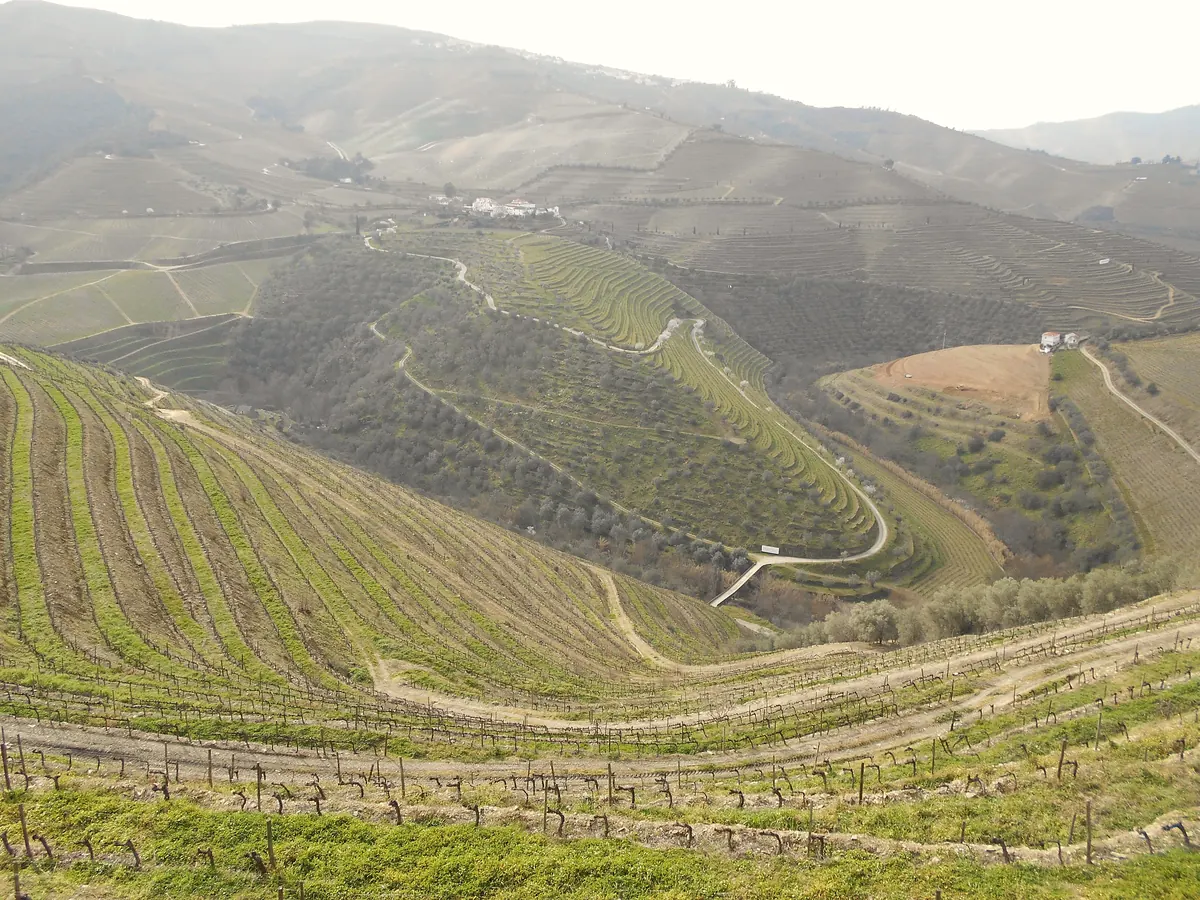
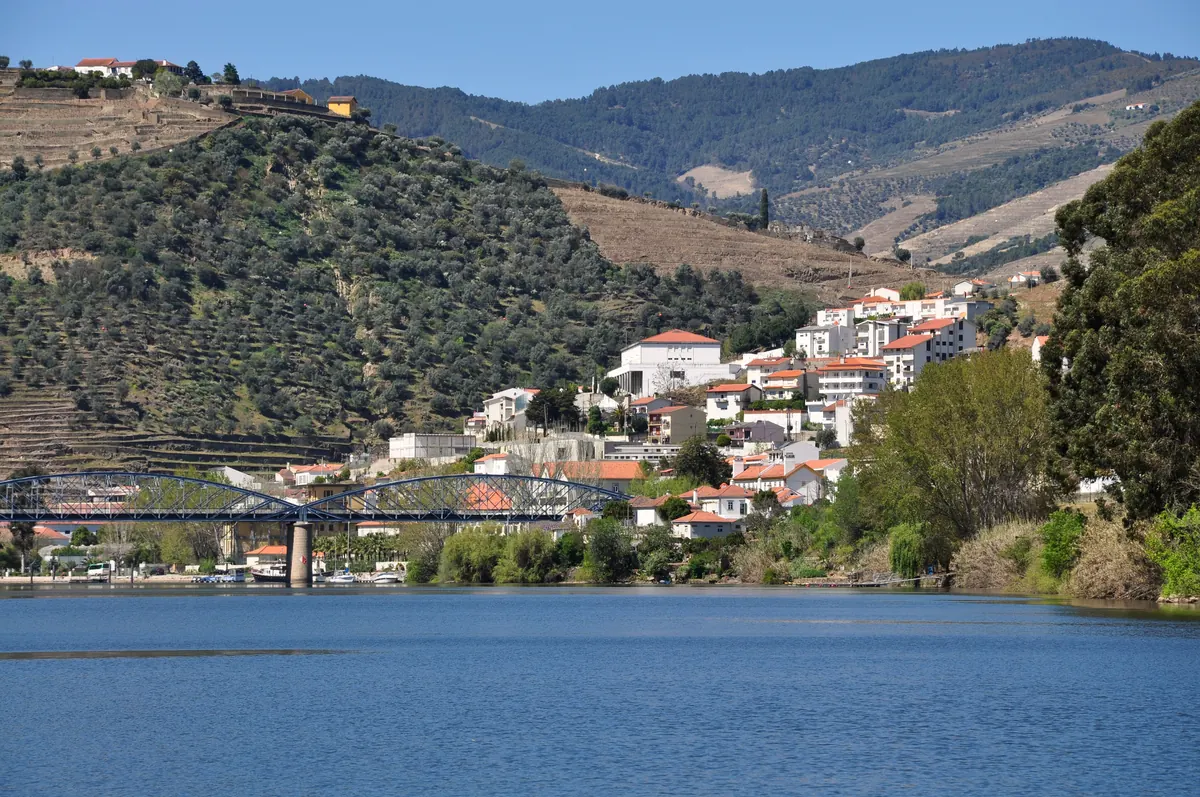
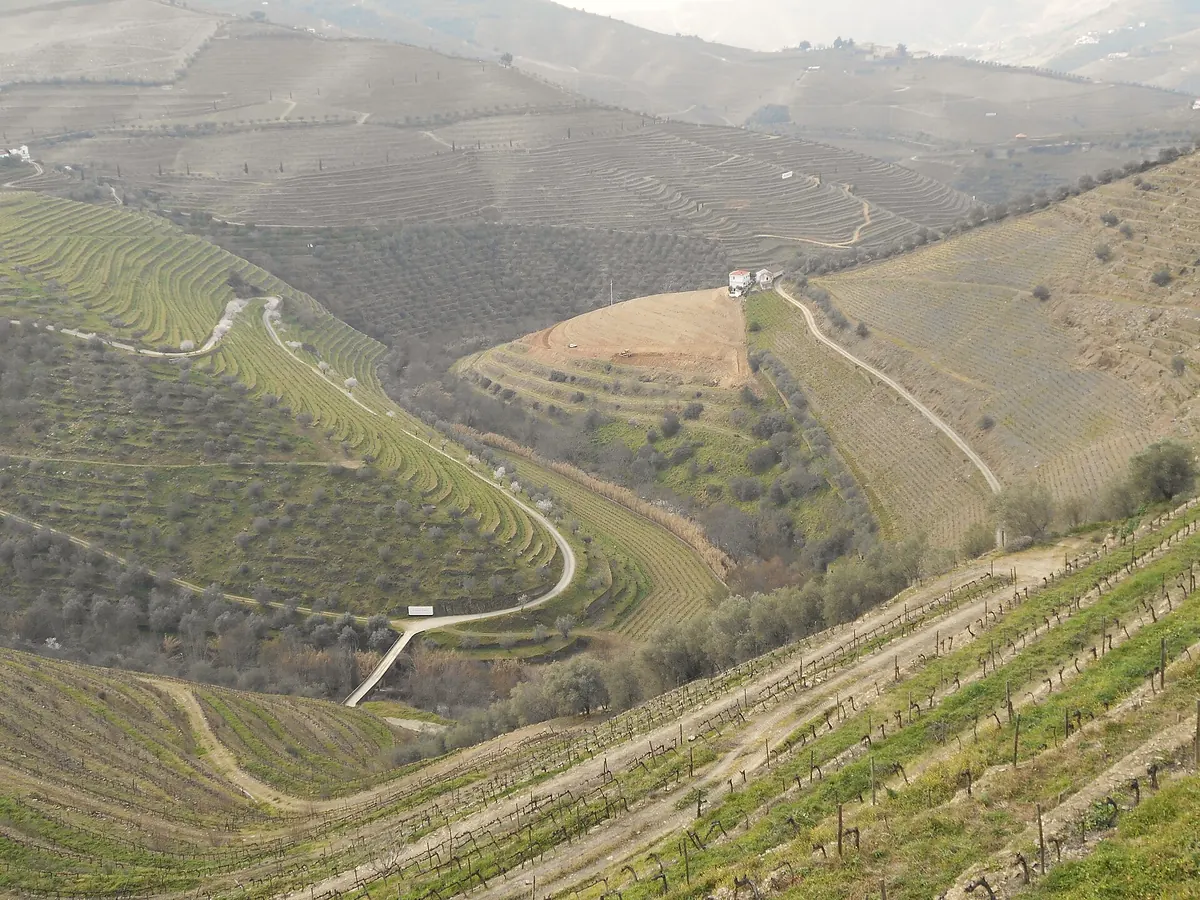
The train is the reason many people choose this option. CP’s own Douro guide describes a line that runs, for most of its length, side by side with the river. For the first hour you pass through the suburbs and the hills east of Porto; the river comes into view in the second half of the journey, and from there to Pinhão the terraces rise straight up from the water on both banks.
The line’s history is part of the view. Construction began in 1875; the railway reached Régua in 1879, Pinhão in 1880 and Tua in 1883, and it was later extended to the Spanish border at Barca d’Alva. Today it runs 172 kilometres from Porto to Pocinho. At Pinhão, take five minutes for the station’s 24 tile panels, made up of 3,047 azulejos ordered in 1937, which show the region’s vineyards, harvest and customs.
In summer CP also runs the Comboio Histórico do Douro, a historic train on the 36-kilometre stretch between Régua and Tua at no more than 50 km/h. It is a separate, seasonal excursion with its own dates and fares, published by CP each year, rather than a way of getting from Porto to the valley.
05Guided tours: what you are paying for
A guided Douro day bundles everything the train leaves to you: transport from Porto, a guide, usually two quinta visits with tastings, often a lunch, and sometimes a short boat trip. That is a genuine convenience, because quintas are farms spread across steep hillsides, and getting between them without a car is the hardest part of an independent day.
Tours vary more than their listings suggest. Before you book, check these points on the listing or with the operator:
- Group size. A day with eight people and one with fifty are different experiences. Small-group and private tours cost more.
- Time in the valley versus on the road. The drive each way is roughly two hours. Look for the time of arrival in the valley and the time you leave it.
- How many estates, and which. Good listings name the quintas. If they don’t, ask.
- What lunch is. A sit-down quinta lunch with wine and a quick set menu in a town restaurant are both called “lunch included”.
- Boat trip length. Usually about an hour; check whether it is included or an extra.
- Pickup. Hotel pickup or a central meeting point, and the latest return time.
- Cancellation terms and what happens in bad weather.
The same tour is often listed on several marketplaces. The operator is named on each listing, and the price and cancellation terms can differ by site, so it is worth comparing. Our GetYourGuide vs Viator comparison explains what to look for.
06How to decide in two minutes
- Do you want more than one tasting? If yes and nobody wants to plan, book a tour.
- Is the landscape the main point? Take the train. It is the most scenic way into the valley.
- Are you travelling on a budget, or as a couple who like to improvise? Train, plus one booked quinta near Pinhão.
- Travelling with someone who has limited mobility? A private tour or a driver is easier than stations, taxis and steep quinta paths.
- Visiting in the September harvest? Book early either way. Quintas and good small-group tours fill first.
Take the 07:30 train to Pinhão, book one quinta that offers a station pickup or is a short taxi away, eat a long lunch, take an hour on the river and catch the 16:41 or 18:11 back. You get the scenery of the train and the depth of a tasting without a tour bus.
07Practical tips for either option
- Sit on the right going upriver for the best river views once the line reaches the Douro.
- Pack for heat. The valley is often much hotter than Porto in summer; check the forecast for Régua or Pinhão on IPMA, not just for Porto.
- Don’t stack your days. Keep the Douro and the Gaia lodges on different days, as wine-heavy days add up. See our Gaia cellars comparison for the lodge afternoon.
- Consider a night. Staying over in Pinhão or Régua removes the pressure of the last train and lets you see the river in the evening.
- Driving instead? Only with a driver who isn’t tasting. Portugal’s drink-driving rules are strict.
Douro Valley tours from Porto on Viator
Live listings and from-prices pulled from Viator. Ratings and review counts are Viator travellers’, not ours; we haven’t taken these tours.
Prices and availability from Viator; may change. Prices shown in US dollars, per person unless Viator says otherwise. These are affiliate links: if you book, we may earn a commission at no extra cost to you. How it works
Best-rated Douro tours, free cancellation
Viator’s highest-rated options with free cancellation and at least 25 reviews.
Prices and availability from Viator; may change. Prices shown in US dollars, per person unless Viator says otherwise. These are affiliate links: if you book, we may earn a commission at no extra cost to you. How it works
QuestionsFrequently asked
Which Porto station does the Douro train leave from?
On CP’s timetable valid since 5 August 2026, the direct InterRegional trains to Pinhão at 07:30, 09:30, 13:30 and 17:30 leave from Porto Campanhã. Some services start at São Bento, and frequent suburban trains link the two stations.
How long is the train from Porto to Pinhão?
About 2 hours 15–20 minutes on direct InterRegional trains, and about 1 hour 55 minutes to Régua.
How much is the train from Porto to the Douro Valley?
CP’s 2026 fares are €12.45 single from São Bento to Pinhão (€12.35 from Campanhã) and €11.10 from São Bento to Régua on InterRegional trains. A return is two single tickets.
Is a guided tour or the train better for wine tasting?
A tour, if you want two or more tastings without arranging transport between estates. By train you can still visit a quinta, but you book it yourself and usually need a taxi from the station.
Can I see the Douro Valley in a day by train?
Yes. The 07:30 from Campanhã reaches Pinhão at 09:51, and return trains leave Pinhão at 16:41 and 18:11, giving you six to eight hours in the valley.
Photos on this page come from Wikimedia Commons photographers and are credited under each image.